


The AWS bill is the smallest cost the cloud charges you. Here are the five hidden costs every leader building Edge AI is paying : and most don't see on any invoice.
The most important AI products being built right now share a single architectural question: how much intelligence runs on the user's device, and how much has to phone home to a data center?
Cloud-first thinking has one answer. Phone home. For everything. Always.
That answer is increasingly wrong, and the bill is showing up in five places most leaders don't track.
1. The cost your users feel
Edge AI exists because some software cannot be fast if it has to phone home. A voice assistant that responds in 200 milliseconds feels alive. At 1.5 seconds it feels broken. Light has a speed limit, and the cloud is on the wrong side of it.
The same physics applies to surgical robots, drones avoiding obstacles, AR headsets, and the humanoid assistant standing six feet away currently routing every exchange to a server two thousand miles distant. Users won't articulate why your AI feels worse than the version their phone shipped with. They'll just stop using it.
2. The cost your customers wear on their walls
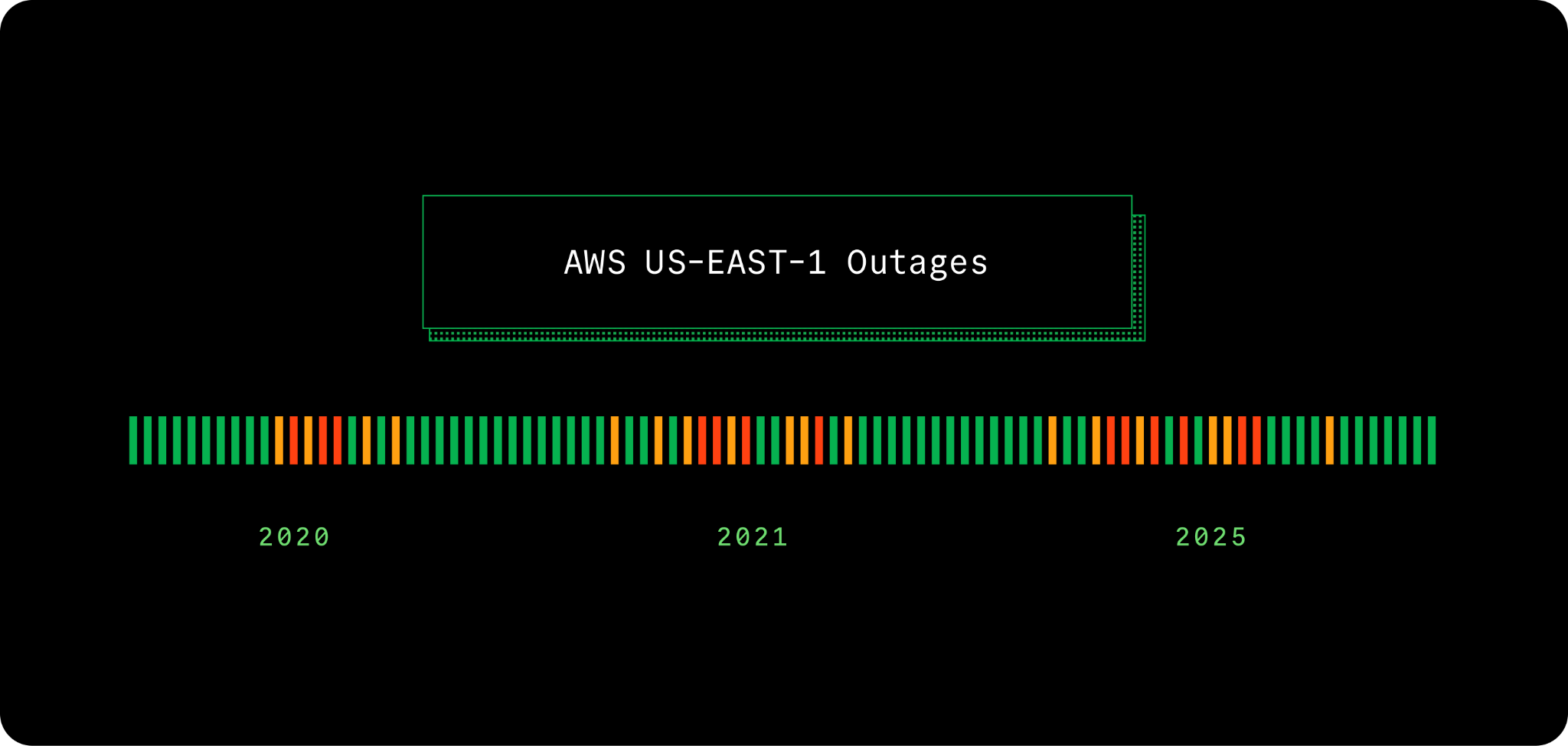
On October 20, 2025, AWS US-EAST-1 went down for fifteen hours. Ring doorbells stopped recognizing faces. Alexa devices went silent. Smart locks failed. McDonald's mobile orders broke. Banks locked customers out.
That last list is what most coverage focused on. The doorbell list is the more revealing story.
A doorbell is a physical object with a camera and a processor inside it. When AWS has a bad day, it stops being intelligent : not because the hardware failed, but because the "intelligence" never lived there. It was a thin client glued to the front of someone else's compute.
This was the third US-EAST-1 outage in five years. Northern Virginia hosts an estimated 30–40 percent of all AWS workloads globally. That's the single-point-of-failure risk a generation of consumer hardware companies quietly accepted.
When the server has a bad day, your customer doesn't blame Amazon. They blame you.
3. The cost your network can't keep paying
Every cloud-first design makes the same bet about the public internet: bandwidth will be there, cheap, and neutral. All three are eroding.
The hyperscalers saw it coming. Google, Microsoft, and Amazon built their own private global fiber networks. Meta built one for Meta. The conclusion was identical: depending on the public internet at scale was a losing position, so they stopped depending on it. The hyperscalers run on roads they own. Everyone else runs on the public road : which is getting more crowded, more expensive, and less neutral every year.
The right question for any leader shipping Edge AI in 2026 isn't should we use the cloud. It's should our product's intelligence depend on a network we don't own behaving the way we hope it will.
4. The cost your data carries
Every byte of data that leaves the device is a liability : to your privacy posture, your compliance surface, and your customer's trust.
GDPR fines have crossed €5.88 billion cumulatively since 2018, and the rate keeps rising. The EU AI Act, the Cyber Resilience Act, and regional data sovereignty laws all aim particularly hard at AI products that ingest user data. Most of that compliance work would simply not exist if the data never left the device. For Edge AI products, locality is the cheapest compliance strategy on the menu, and the gap between it and every alternative widens with each regulatory cycle.
Trust compounds the same way. Enterprise buyers stall procurement when they can't prove what an AI agent did with their internal data. In cloud-first designs, the honest answer to where does our data go and who else can see it is usually: we don't know, and neither does our vendor. That trust gap shows up as deals that don't close.
5. The cost you can't see
The most expensive part of the cloud tax is the Edge AI you cannot build because cloud-first thinking has shaped your roadmap.
- Glasses, a phone, and a laptop belonging to the same person, sharing AI state in real time without routing through a third party.
- An AI agent that remembers years of context, runs locally, and whose memory never leaves your control.
- Edge Intelligence that gets smarter from peer learning, without raw data ever leaving the device.
- AI that keeps working in the subway, the operating room, the construction site, the field.
None of these are exotic. Developers are being asked to build them now. They're hard to build with a cloud-first toolkit because the toolkit assumes a server in the middle. So the next ten Edge AI products like these never get started.
That's the most expensive thing the cloud has ever charged anyone, and it never shows up on a bill.
What changes when you stop paying it
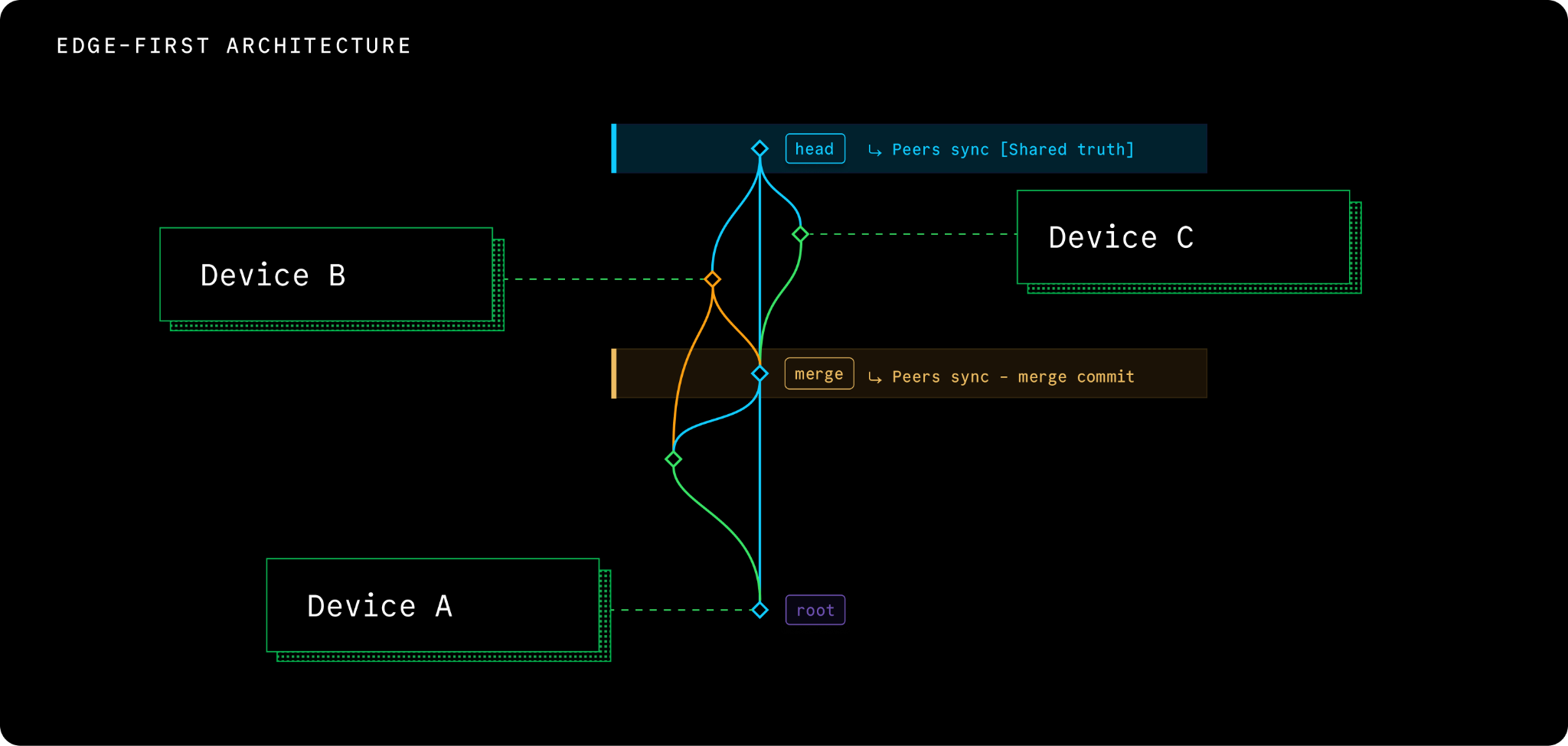
Edge-first architecture inverts the model. The device is the source of truth. The cloud is an optional convenience, not a required gatekeeper. Authority lives where the data lives.
That requires infrastructure built for the inversion: a distributed database that runs on the device, conflict-free data types for merging across peers, content-addressable storage for verifiability, and peer-to-peer sync. In short : the Edge data management layer most teams underestimate the cost of building themselves.
That's what we're building at Source. DefraDB is an application-centric distributed database for Local First software and Edge AI : the layer that lets your product run at the speed of the device and keep working whether the network does or not.
The cloud era isn't over. It's no longer the answer to every question. The leaders who answer the Edge AI question first will define the next decade of intelligent products.
---
Source builds infrastructure for Local First and Edge AI applications. Learn more about DefraDB.


